
Spring 2026, and the birds are back. They have flocked in their thousands from winter habitats in sub-Saharan Africa, migrating to breeding grounds and burrows across Europe and Asia. Some, like the sand martin, have made their way to the Fertile Crescent, nesting on the banks of the Tigris and the Euphrates.
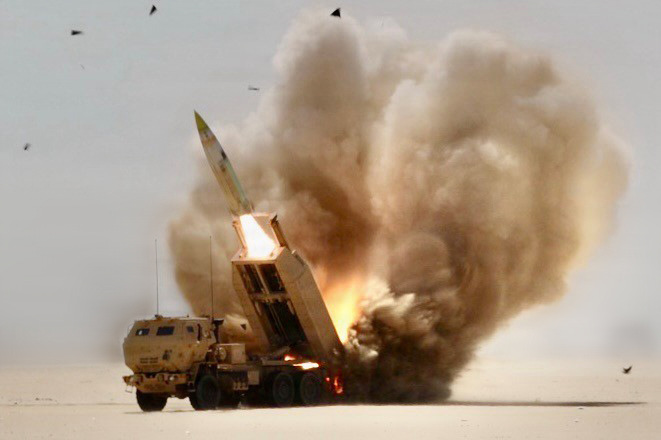
These birds have made their journeys for millennia, indifferent to the shifting empires beneath their flight paths. This year they had companions in intercontinental flight. In early spring the US launched a barrage of missiles from ships and bases across the eastern Mediterranean, destined for targets in Iran. For a brief time, nature’s finest navigational machinery shared its airspace with humanity’s attempts to imitate it – the homing powers of migratory birds mirrored by GPS data and infrared cameras.
In other recent conflicts, the US has at least made a show of hiding its economic interests behind democratic or diplomatic pretensions. In this war the Trump administration was quick to jettison any tokenistic attempt to frame the conflict as a bid to liberate the Iranian people from an authoritarian regime. Bloodlust, bravado and naked self-interest are instead on proud display at the Pentagon, under its self-styled US secretary of war, Pete Hegseth.
In the long view of history, not much is new. In Hegseth’s crusader tattoos, in Trump’s planned triumphal arch, the past is being excavated and enlisted to animate and justify the present. History is alive and contested in this war, and the stakes of its use and misuse are especially high.
But first, the birds.
In my third year of medical school I was given free rein to undertake additional study in areas of my choosing. I selected a few courses that veered off the biomedical path. One particularly enjoyable lecture series covered comparative psychology – the study of mind and behaviour across species.
I wrote my third-year dissertation within this field. The aim was to trace the evolutionary origins of a mental capacity known as theory of mind – the ability, highly developed in human beings, to attribute perceptions, intentions and beliefs to other minds. With a grandiosity accessible only to a 20-year-old undergraduate, I thought I would say something original about the human condition, about the spark that separates us from our nearest relatives.
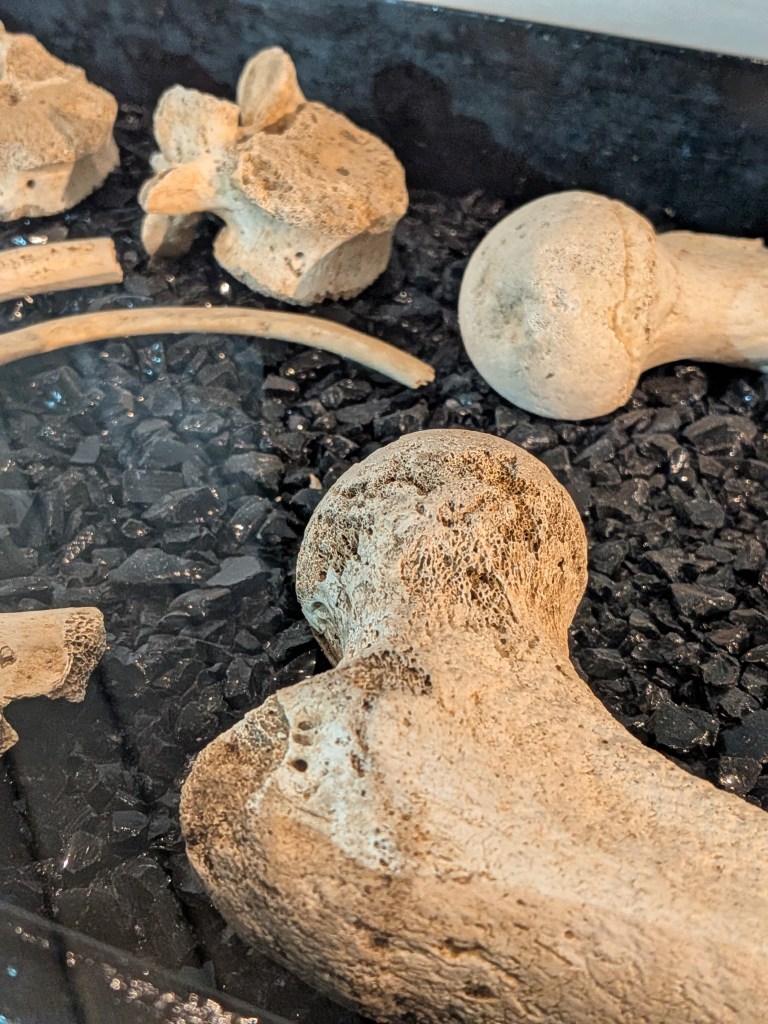
The problem I soon encountered was how hard it was to say anything at all about the experiences of early humans. As a field, evolutionary psychology doesn’t have very much to work with. Any number of conjectures can be made about selection pressures in the African savannah, with no convincing ways of testing their validity. The behaviours and utterances of early humans were left unrecorded, dying with the people who spoke them. Only the hard skulls of hominin species remain, the soft tissues long since rotted away, the rough dimensions of the brain’s bony encasement providing only the crudest of clues about the mental capacities within.
We are like archaeologists working with these bony fragments, trying to reconstruct a rich civilisation from a handful of stone foundations scattered in a field. The gaps in the record, termed lacunae by historians, can seem larger than the sources themselves. The term exists within medicine as well, referring to the minute cavities within the structure of bone, whose patterns leave readable spaces when analysed post-mortem.
My only choice was to work with data from our closest modern relatives – chimps, bonobos, orangutans – and use assessments of their mind-reading capacities to make inferences about our common ancestors. The process is analogous to the work undertaken by historical linguists, reconstructing lost and dead languages from the differences and shared attributes of their living descendants.
Armed with a swathe of primate studies, I took a first draft to my supervisor.
“It’s quite good,” she said. “But what about including some bird studies?”
My supervisor was an eminent professor of avian cognition. By her reckoning, ‘bird-brained’ corvid species (crows, ravens, rooks) were highly intelligent and unfairly overlooked.
“I suppose my thesis is about human evolution,” I responded. “So I’m not sure how it would fit.”
The dissertation did not do very well. I think it scraped a 2:1. It felt like I had found out too late that I was on a hiding to nothing. Whilst I managed to provide a reasonable overview of contemporary primate studies, I had come to realise how difficult it was to say anything at all about the minds of people living in the recesses of deep time.
The birds kept cropping up. The lecture series on animal intelligence looked at concepts of numbers and language in non-human animals, at tool use and complex problem-solving. In integrating data from the sun and stars, as well as their own internal magnetic sense, migratory birds demonstrate a highly specialised cognitive feat – one that allows them to travel thousands of miles back to the same nest year after year.

Photo: Andy Reago & Chrissy McClaren (CC BY-SA 2.0). Cover image of a sand martin: Luiz Lapa (CC BY 2.0)
Bird and ape intelligence are sometimes cited as examples of evolutionary convergence, in which similar structures and abilities arise not from common ancestors, but in reaction to common challenges. This means that analogous features can form on distant branches of the tree of life. Bats and birds, for instance, are only distantly related, but have independently evolved wings, much as birds and apes have developed similarly advanced cognition through markedly different means.
Other animals are sometimes included in this pantheon of animal cognition. Octopuses arrive at complex problem-solving through vastly different neural architecture, with a central brain connected to semi-autonomous nervous systems within each of their arms. Ants, by contrast, have relatively simple brains, but in vast colonies they can act with apparent intelligence – forging the most efficient paths to a food source, or building ventilation systems within their nests – thus problematising what we mean by an intelligent being.
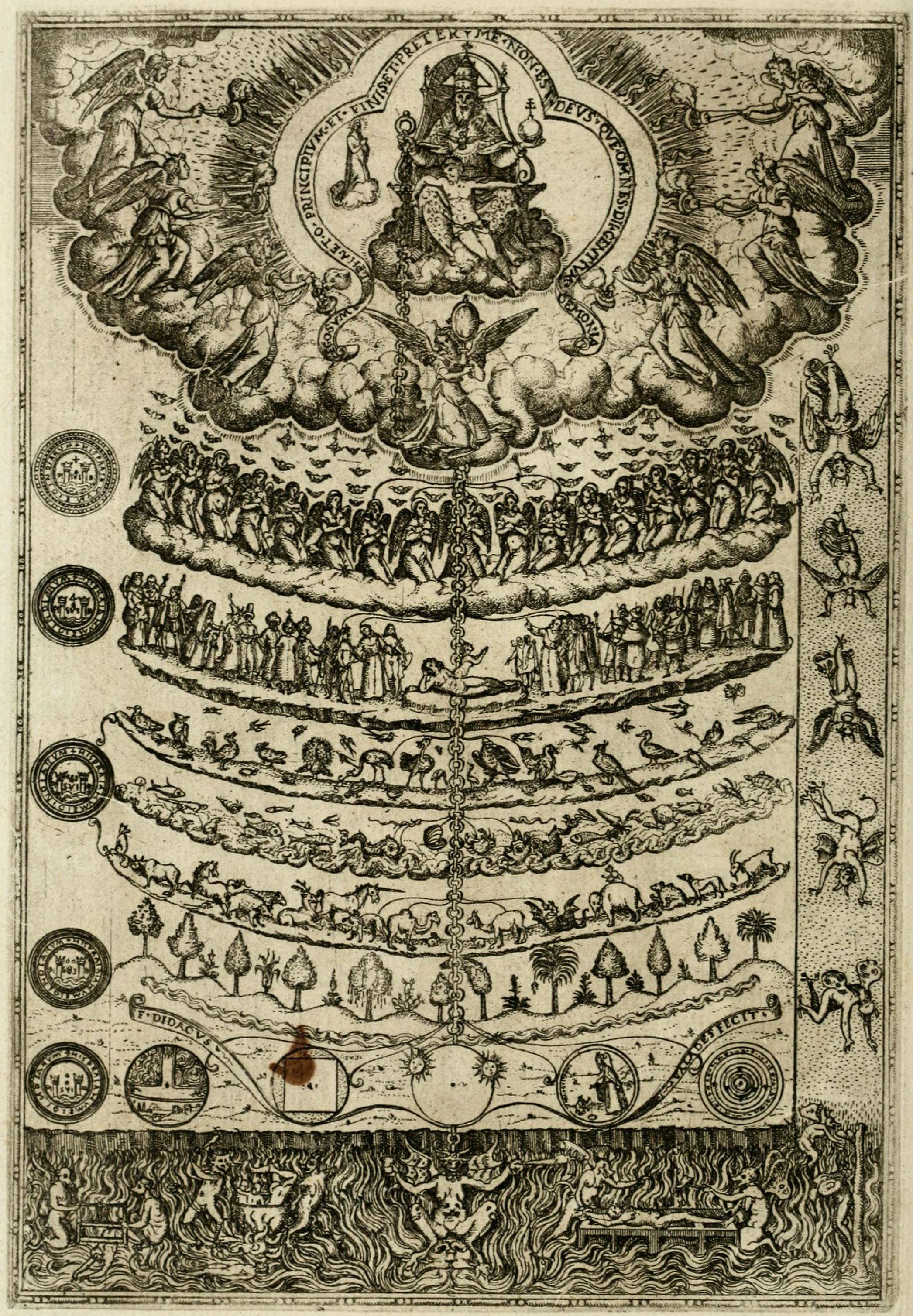
So, far from there being an anthropocentric ‘great chain of being’, with humans as the pinnacle of intelligence and all other creatures weak imitations below, we instead have a variety of species arriving at intelligent behaviour through myriad means.
The even more radical position would be to question whether animals can be ranked in a hierarchy of intelligence in the first place, a challenge posed by the comparative psychologist Sara Shettleworth. If intelligence functions to maximise an organism’s survival, then all well-adapted organisms can be said to be performing this task with a similar level of success. By using the abilities of Homo sapiens as a benchmark against which to compare other animals, or thinking only in terms of abstracted lab-based tests, we miss the environment-bound value of cognition.
This leads us directly into one of Darwin’s best-known and most often misunderstood phrases: ‘the survival of the fittest’. He didn’t coin the phrase, but adopted it in later editions of On the Origin of Species. At first glance, the word ‘fittest’ carries connotations of physical strength, dominance and superiority – a reading that has been used, by way of the naturalistic fallacy, to morally justify the domination of the weak by the powerful. But properly understood, biological ‘fitness’ refers to how well an individual is shaped to suit the environment it finds itself in. The association with power and might nonetheless stuck, going on to bolster the emerging ideas of social Darwinism, and, in turn, scientific racism and eugenics – under whose aegis some of the worst atrocities of the 20th century would be perpetrated.
All of this might go some way towards understanding the mind of Pete Hegseth. He upholds fitness in the first and less accurate sense, espousing a ‘warrior ethos’ centred on muscularity and might. His Pentagon press briefings eschew the legalistic and measured tone of military proclamations from the Biden or Obama eras. There are no euphemistic discussions of “engaging combatants”, or “neutralising hostile forces”. Instead we have promises of all-American lethality; promises to “untie the hands of our warfighters” in order to “intimidate, demoralise, hunt and kill”.
What all this sound and fury has achieved is unclear. America has briefly disrupted the international order, and is now trying, through great human, economic and environmental cost, to drag it back to the status quo that preceded its bombing campaign, with the Strait of Hormuz was open and the theocratic regime still in power.
To condemn this fruitless conflict and its associated violent rhetoric is necessary and right, but it does not go far enough. The more interesting and important endeavour is to examine the conditions that have allowed the current cabal to gain and maintain power, to overturn basic civic rights at home and to launch a new age of American interventionism abroad.
This is fitness in the second sense. What cultural conditions have allowed these strongmen to thrive and become the dominant species? Like a finely adapted organism, Hegseth is well fitted to the current political climate, and his success within it reveals its coarsened norms. He is a driven, wily man, and a shrewd communicator, flourishing in a media ecosystem built to reward the worst expressions of his abilities.
After a stable and uneventful childhood in the Midwest, he left home for Princeton and later Harvard. His conservatism at this time is well documented, but it was during his military service at Guantanamo Bay and in the Iraq war that he became increasingly politicised. Around this time he forged beliefs of such conviction that he would have them etched onto his body. One such tattoo proclaims the motto Deus vult, ‘God wills it’, a phrase that once emboldened crusading knights in their Holy Land campaigns, and has gone on to become associated with white supremacists and Christian nationalists. A crusader cross can also be seen on his chest. If the enemies of this militaristic Christian order were not clear enough, Hegseth chose to emblazon his right arm with the word kafir – Arabic for ‘infidel’, and a badge of defiance in far-right circles.

After tours in Iraq and Afghanistan, he entered the media as a provocateur for Fox News, coming into his own as a foot soldier of the ever-intensifying culture wars. At this point he remained a fringe player, far from conventional political office. His tattooed slogans were actively held against him in the latter stages of his military career; in 2021 he was stood down from the National Guard after a fellow soldier raised concerns about the extremist symbology of his tattoos. By 2025, the culture had shifted so far that Trump had no reservations about appointing Hegseth to the highest civilian office at the Pentagon.
History moves in shifting Overton windows. Regimes come and go, but leave behind altered norms and institutions that frame what is permissible for their successors. With the democratic norms of the American republic in poor health, any post-Trump administration will inherit conditions that would have been unrecognisable in 2016.
Nothing can be achieved in the reconstruction of historical figures, ideas or events without first grounding them within the terms of their own time – or rather, these two tasks, of sketching the object and its background, are part of the same intertwined act. To frame it in evolutionary terms, all people, ideas and civilisations operate with varying degrees of survival and reproductive fitness, which tell us as much about the characteristics of the ecological niche as they do about the species themselves. Neither can be understood without consideration of the other.
It can be a tired game, comparing present-day America to ancient Rome.
The classicist Mary Beard opened her new podcast Instant Classics by asking which Roman emperor was most like Donald Trump. Beard and her co-host Charlotte Higgins made their feelings clear: they were weary of people at parties finding out their profession, and invariably asking which mad, despotic emperor was most similar to Trump. Listeners were left wondering whether a producer had persuaded Beard and Higgins to start the series with an attention-grabbing title, and whether they had reluctantly agreed to this populist gambit in order to attract a decent pool of listeners, before then getting on with the real work of historical enquiry.
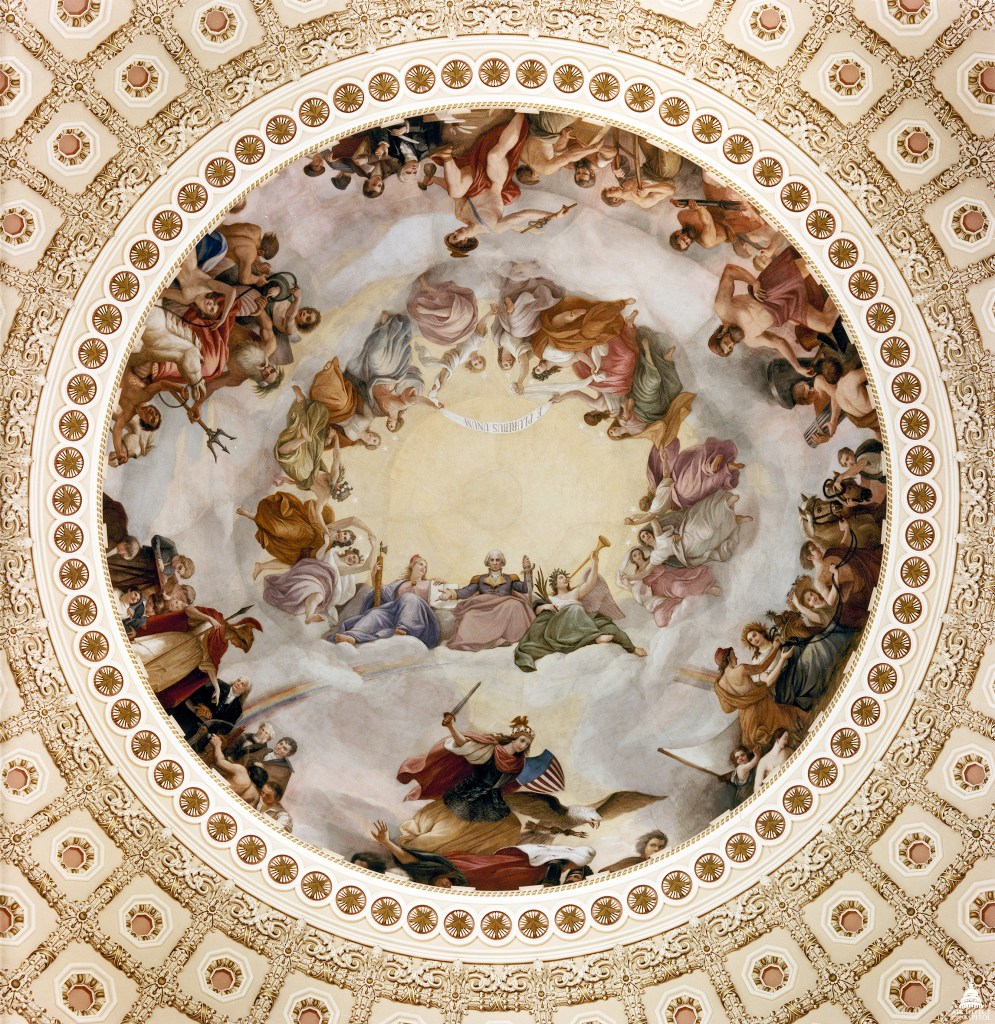
These comparisons are as old as America itself. The US was founded explicitly on classical ideals, and has since lived in perpetual fear that a power-mad Julius Caesar or an ambitious young Gaius Octavius might drag the elected republic into a one-man autocracy.
By the first century AD, the Roman empire was approaching the peak of its power, stretching out across much of Europe and North Africa, and reaching as far east as the Black Sea and the Levant. The region that now forms Iran sat at the edges of Roman power, but my focus here will not be on the wars that Rome fought with the Parthian and Persian empires of the Iranian plateau. Instead I will look elsewhere on the eastern frontier, to the epochal events of first-century Jerusalem.
The siege of Jerusalem in AD70 is a well-documented historical episode that can tell us much about the language of war and the othering of enemies.
The main source is Josephus – a Judean rebel turned Roman defector who became a close confidant of the emperor Vespasian, and would write his epic history The Jewish War under imperial patronage. He is a fascinating source, with a foot in both camps of the conflict. He acknowledges his own biases in the preface to The Jewish War:
It is not my intention to counter the champions of the Romans by exaggerating the heroism of my own countrymen: I shall state the facts accurately and impartially. At the same time the language in which I record events will reflect my own feelings and emotions; for I must permit myself to bewail my country’s tragedy.
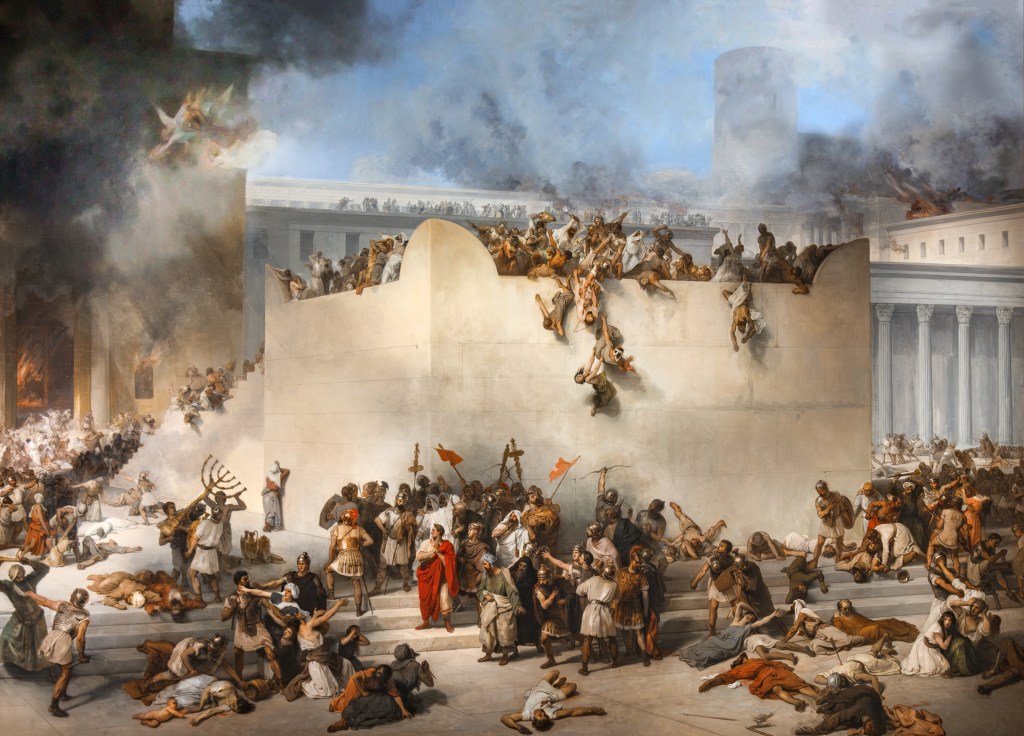
Judea had been for all intents and purposes a Roman province for a century or so. It was ruled as a vassal state, first through client kings like Herod the Great, and later by Roman procurators. Taxes went back to Rome, but there were no attempts at forced cultural assimilation; the vast Temple complex stood in central Jerusalem, with the priestly class collecting its own taxes, operating independent courts and undertaking the sacred rites and daily sacrifices central to Second Temple Judaism.
Not everyone was happy with this set-up. This was the era of the ‘Judean People’s Front’ and the ‘People’s Front of Judea’, as Monty Python would later have it – a noisy ecosystem of rebels, bandits and zealots.
By the late 60s AD, Rome decided that enough was enough, and sent in the legions. Josephus recounts in bloody detail how the Jewish revolt was crushed by Roman forces, with Jerusalem kept under siege for five bitter months. The emaciated and weary rebels were pushed back into central Jerusalem and were ultimately forced to make their last stand from within the walls of the Temple, the holiest of sites transformed into a blood-stained fortress.
At the climax of the narrative, the Roman general Titus, son of the emperor Vespasian, gives a lengthy speech. He has the Judean rebels on the ropes. With most of the city taken, he is poised to destroy the Temple, and with it the last vestige of Judean control. A bridge separates the Temple complex from the Roman-controlled city, and Titus ventures there with his translators to address the rebels:
Are you satisfied now, gentleman, with the sufferings of your country? You who, in utter disregard of our strength and your weakness, have through your reckless impetuosity and madness destroyed your people, your city, and your Sanctuary, and richly deserve the destruction that is coming to yourselves; you who from the moment Pompey’s forces crushed you have never stopped rebelling, and now have made open war on Rome. Did you rely on numbers? Why, a tiny fraction of the Roman army sufficed to deal with you! Well then; on the trustworthiness of your allies? And which of the nations outside our empire was going to prefer Jews to Romans? Or on your wonderful physique? Yet you know that the Germans are our slaves. On the strength of your walls? What wall could be a better obstacle than the open sea that is the bulwark of Britain? But Britain was brought to her knees by the arms of Rome!
And on he goes, with proclamations of Roman might. He makes a final offer:
Why, even now you stand in arms, and not even at your last gasp so much as pretend to be asking for mercy… If you throw down your arms and surrender your persons, I will grant you your lives, like a mild master of a family.
Trump too fancies himself as a ‘mild master’ of the world order, as the pater familias of his newly created Board of Peace (an Orwellian title, if ever there was one). In a series of disturbing posts he threatens total annihilation of Iranian civilisation, supposedly with a heavy heart. Like Titus, he casts himself as a magnanimous conqueror who is forced to destroy his enemies because of their own insolence:
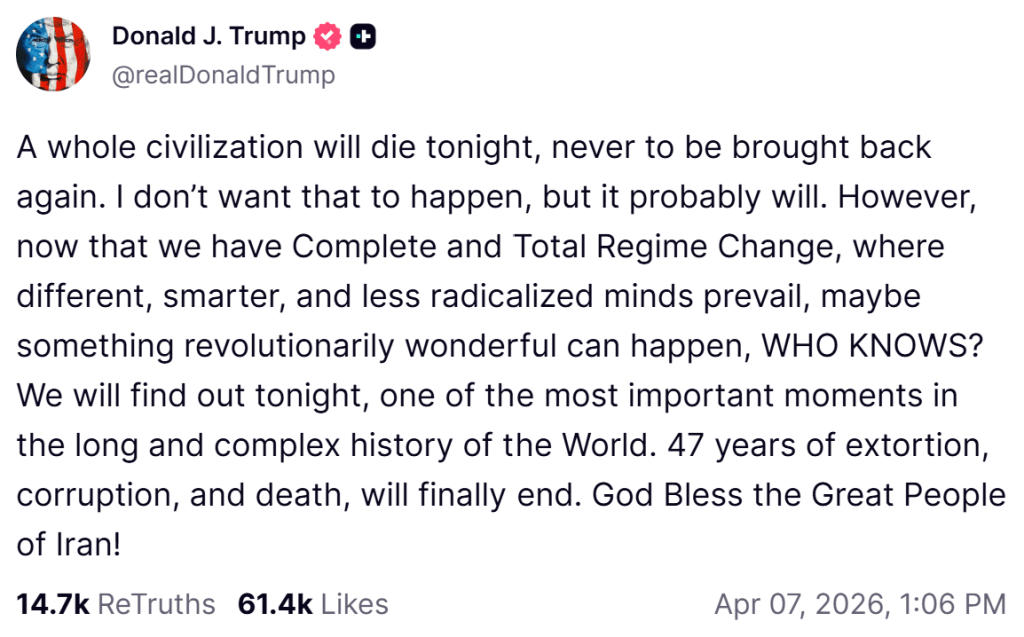
Much as Titus frames himself as a reluctant destroyer of worlds:
It was unwillingly that I brought my engines of war against your walls; I always prohibited my soldiers, when they were set upon your slaughter, from their severity against you. After every victory I persuaded you to peace, as though I had been myself conquered. When I came near your temple, I again departed from the laws of war, and exhorted you to spare your own sanctuary, and to preserve your holy house to yourselves... Yet have you still despised every one of my proposals, and have set fire to your holy house with your own hands.
It is natural to have some degree of scepticism about the veracity of this long and poetic speech, seemingly remembered verbatim by Josephus as he documented the war a few years later from the comfort of the imperial court. Perhaps it says more of literary conventions than of historical accuracy. Regardless, some have described The Jewish War as a tale stifled by its Roman patronage, told by a Jewish rebel turned Roman collaborator, full of the zealotry of the convert. But it is also a contemporary eyewitness account, which is more than can be said for most ancient sources. And whilst the patronage of the Flavian dynasty clearly places some limitations on what Josephus is able to say, the style and substance of what is recounted is instructive in itself, shedding light on the Romans’ sense of their own valour and dignitas.
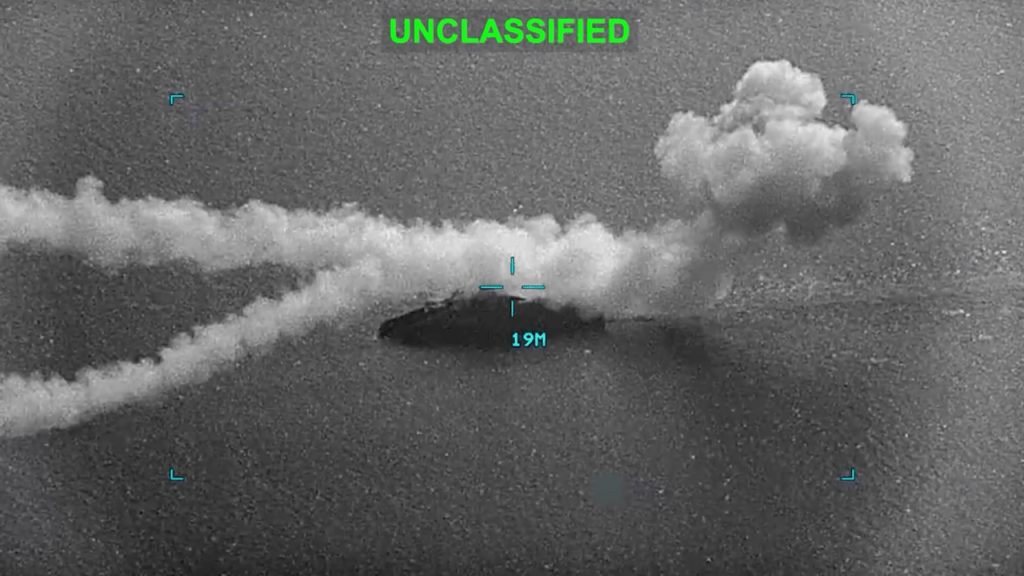
The Iran war reaches us through black-and-white aerial photography. This grainy, abstract imagery distances us from the realities on the ground, from the panicked human beings within these bombed targets. We see little from the other side, as the Iranian regime stifles opposition using an internet blackout. Few in power want the realities of their wars broadcast to the world – Israel similarly continues its ban on foreign journalists wishing to enter Gaza independently.
Josephus by contrast shows us the full horrors of war. This is demonstrative not of greater transparency, but of a vast divide between ancient and modern sensibilities. With the Temple surrounded, the rebels choose to fight on. Titus, supposedly with great reluctance, obliterates the city. Soldiers and citizens, young and old – all are slaughtered or sold into slavery. The centurions are described by Josephus with a mixture of fear and admiration. Events that we would now frame as war crimes are paraded with pride. To pre-Christian minds, war and killing are facts of life, ways of life even, rather than necessary evils to be fretted over. Life is a short, heroic blaze of glory – a quiet and dreary eternity in either Hades or Sheol awaits soldiers on either side of the Jewish revolt. In this world there is no just war theory, no heavenly glory or eternal damnation.
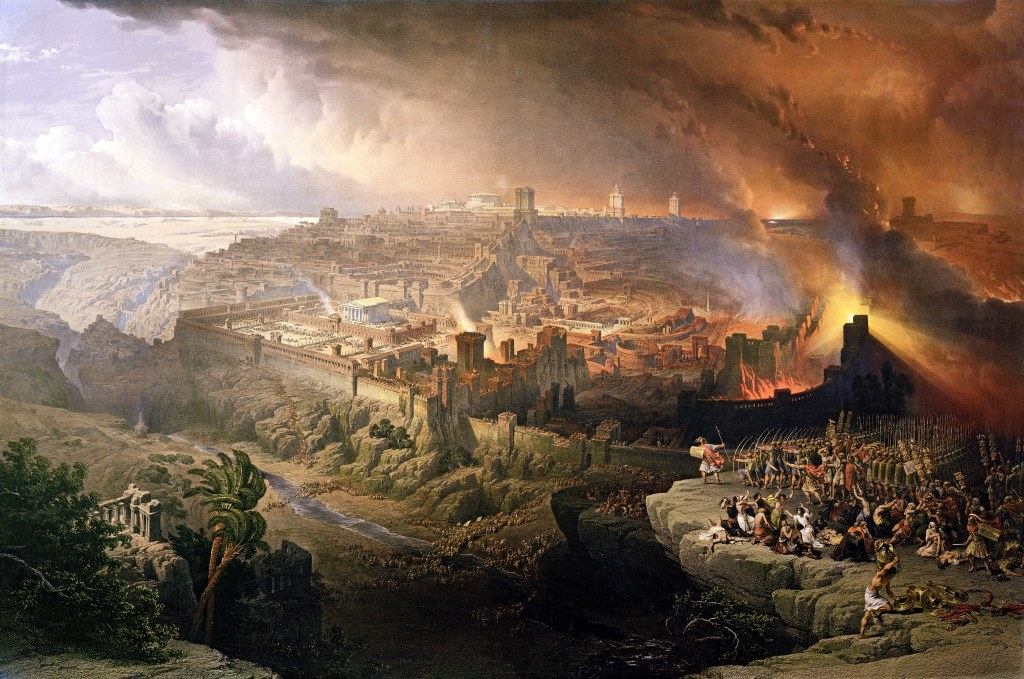
The mass suicides at Masada tell a similar story. By Josephus’ account, a group of rebels found themselves cornered in the mountaintop fortress of Masada during the final stretches of the war. Jerusalem had fallen, and the Romans were rooting out the last dregs of resistance. Facing certain death at Roman hands, the rebels instead chose to take their own lives. When the legions finally scaled the walls they were met with nothing but bodies. It is a chilling tale, and Josephus does not shy away from the most upsetting details. However, no other written sources attest to the events at Masada, and many scholars are doubtful of Josephus’ account, suspecting that the reality was closer to a straightforward massacre by the victorious Roman forces. If the episode at Masada is a lie, then it is one that illustrates Josephus’ dual allegiances: his countrymen are given noble and principled deaths, and the Romans, by implication, are painted as the most terrifying military force on earth.
Josephus may be an unreliable narrator, but to point this out is to miss a broader point. If we were to send a modern-day reporter in a time machine, equipped with a smartphone, they would also fail to bring back an objective account of the Jewish-Roman war. That there are no neutral observers, that all knowledge is situated – these have become academic truisms.
In The Realness of Things Past, the historian Greg Anderson considers what this means for historical method. He sets out his stall in the opening lines:
How exactly can we write true or real histories of lifeworlds whose standards of truth and realness were quite different from our own? How meaningful is it to speak of states, societies, and economies prevailing in historically distant environments, where the inhabitants would have found the very idea of a “state”, a “society” or an “economy” entirely meaningless?
Using ancient Athens as his case study, he puts forward the idea of ontological history, a historiographical approach in which the primary questions are of ontology – of things, of existence – asking what people in the past took to be objectively real, what they took as the base assumptions of their world. In such a world, the gods of ancient Greece are not so much believed in, as taken as real, a patent fact of the world – and only then can more epistemic questions be approached. Many things that we take to be real as modern, Western observers are equally contingent, whether or not we recognise them as such.
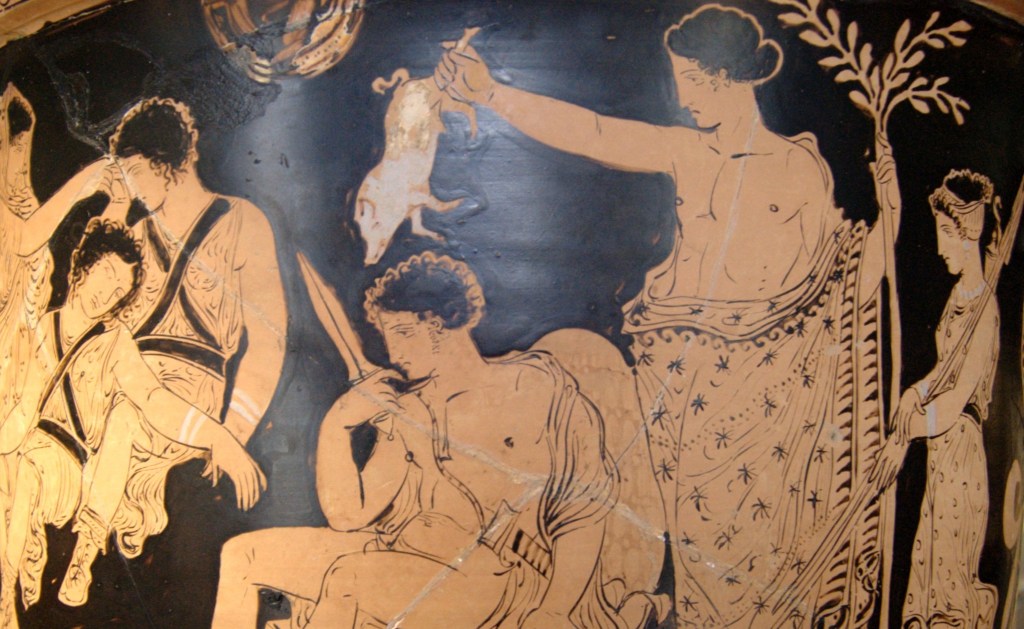
The past is not simply transcribed through historical sources – the first instinct is to translate it into modern terms. In looking back through a modern lens we unwittingly commit anachronism; we collapse and warp other modes of being until they fit into our modern templates, or misrepresent them as prototypes or precursors to modern institutions and values.
To use a Roman example, the fetiales, as I will touch on later, are often described as ‘priests’. Certainly they helped to bring divine sanction to human war, but their role might have been better described in legal, military or diplomatic terms – and their sacral trappings as merely incidental. The more fundamental point is this: these are categories cleaved along modern lines, being applied to a world in which distinctions like ‘the religious’ and ‘the secular’ would have been meaningless. The notion of priesthood is itself a Christian anachronism – no intermediaries were necessary when the gods were so patently close at hand. The fetiales, much like the Vestal Virgins, were not conduits to a distant set of divine beings, but a group of individuals performing a civic duty on behalf of the wider populus. Their job was to appease the gods, who were in close interaction with humans on a daily basis, through thunder and lightning, plagues and pestilence, harvests and famines.
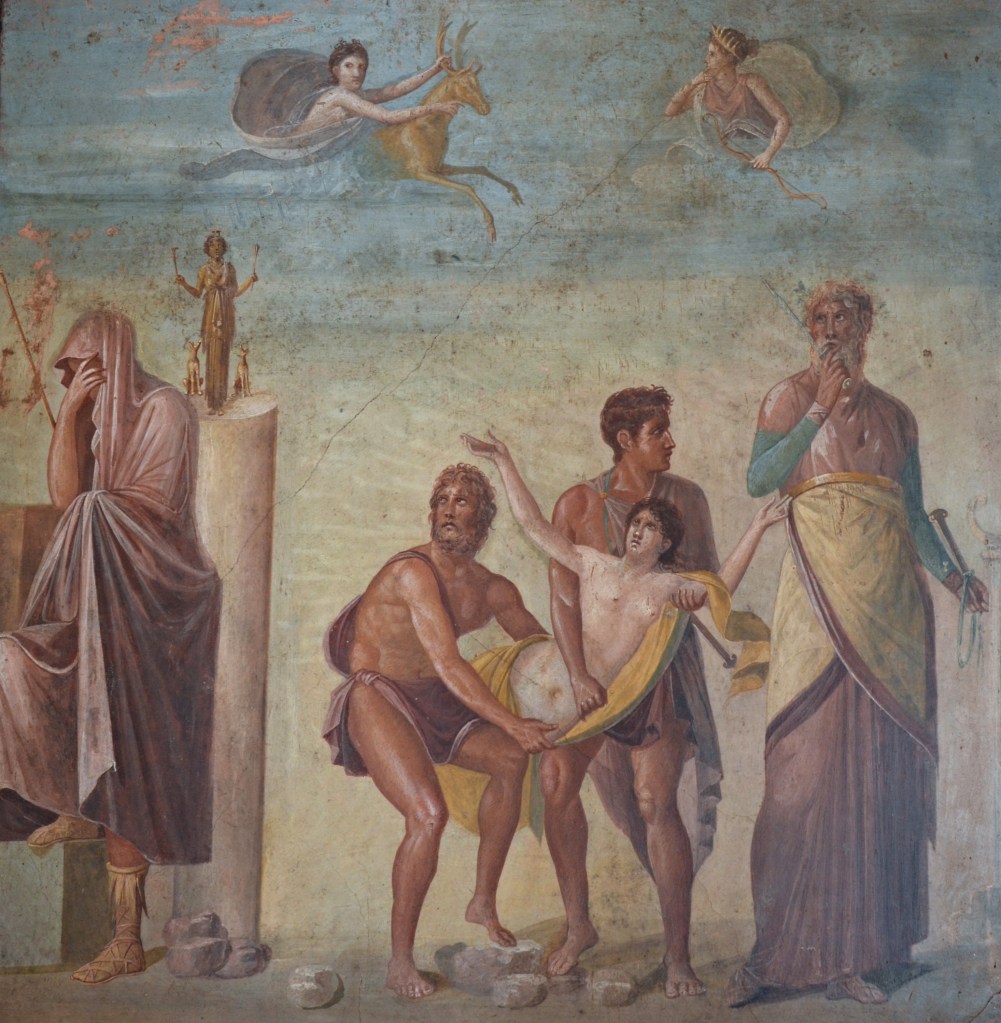
There is a similar story to be found in avian neuroanatomy, of all places. Researchers first mapping out bird brains cast them as simplistic, consisting mostly of a primitive structure known as the pallium, and lacking the neocortex responsible for ‘higher’ cognitive functions in mammals. Only in recent years has the avian pallium been recognised as a neural structure in its own right, now known to be the seat of their most sophisticated cognitive abilities. As in history, so in biology: a mammalian frame of reference was misapplied, and errors arose through a failure to approach other branches of biological life on their own terms.
The broader theme in historiography has been to centre the experiences of marginalised groups. Postcolonial and feminist readings of history have done much to highlight the situatedness of knowledge and to map power structures; social science engages in similar projects when approaching the contemporary world. The trouble is that these frameworks all presuppose language. As soon as we look beyond the world of words, things fall apart. In attempting to reach the experiences of, say, very young children or non-human animals, the linguistic turn has turned away from their realities. Power is undoubtedly exercised over animals and young children, but, lacking the means of linguistic self-representation, they are unable to articulate the kind of standpoint that these approaches are structured to recognise. In such scenarios, however, Anderson’s ontological approach holds: our first job is to reconstruct the things that these other subjectivities take to be salient and real.
We could describe history as an exercise in perspective-taking, though framing it as empathy or fellow-feeling, or as a search for parallels, would be to sell it short. The disanalogies we find when looking towards radically different minds and cultures can be as instructive as, if not more instructive than, the parallels we draw when reaching for the worldviews of others.
For Rome, wars were not straightforward acts of imperialism; instead they were dressed up as acts of divinely sanctioned self-defence, entered into as a last resort after reasonable offers had first been made. In the lead-up to war, the aforementioned fetiales were enlisted to carry out a complex theatre of legal and divine justification for the imminent conflict. Enemies were traditionally given 33 days to comply with Roman demands before facing the might of the Roman army.
Ultimatums of this kind can be read as self-serving pre-justifications of annihilation. An ultimatum is a staged show of clemency, an offer of terms deliberately designed to be unacceptable to the besieged party, thereby laying blame squarely at the feet of the vanquished. Whether deployed by Titus at the gates of the Temple, or by Trump in a Truth Social post, the logic is the same:
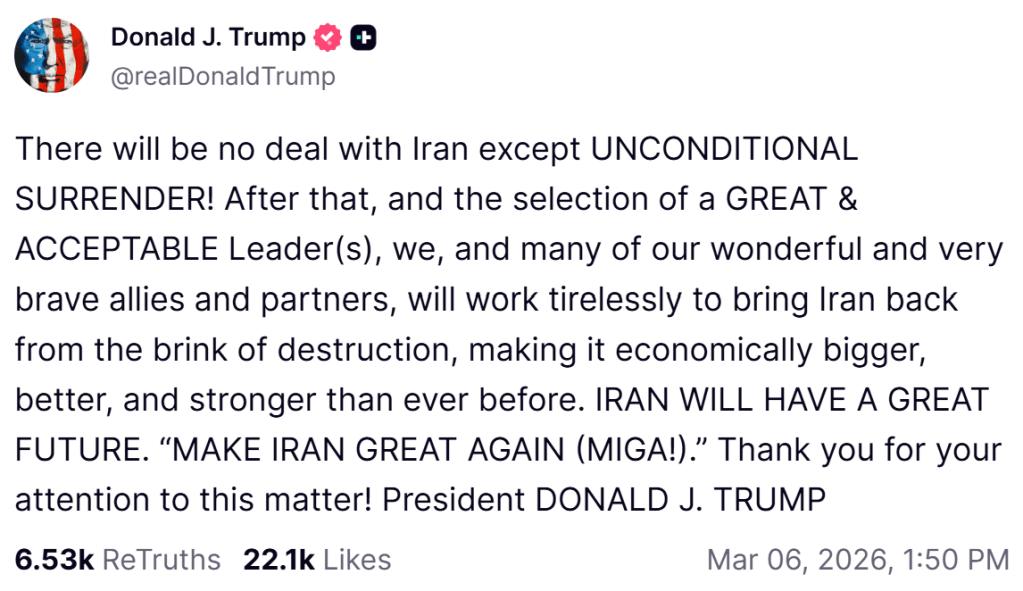
Whilst Trump has so far not followed through on his bluster, we cannot ignore the fact that the United States has, in living memory, wiped out two entire cities following a similar ultimatum. In the Potsdam Declaration of 1945, the Allied forces presented Japan with two options: “unconditional surrender” or “prompt and utter destruction”.
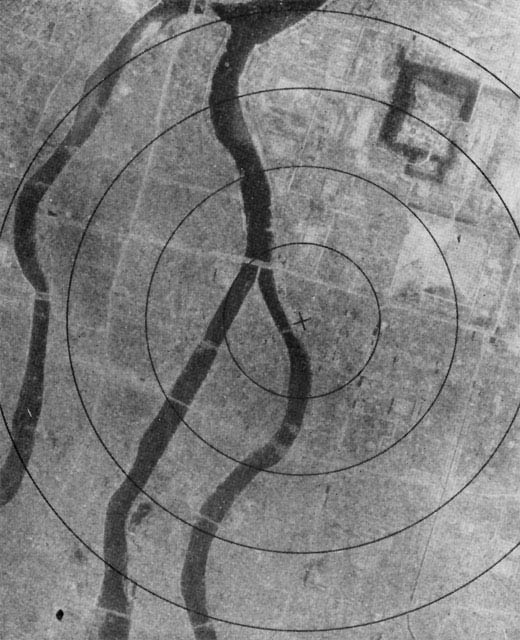
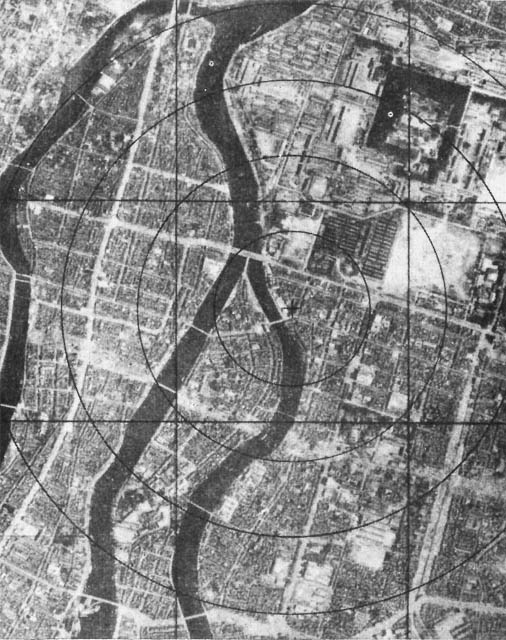
Prompt and utter destruction: Hiroshima before and after the atomic bomb.
The exact decision-making of August 1945 remains a matter of active debate amongst historians, but by some accounts, Japan was already seeking a negotiated peace, even prior to the first atomic bomb – a fact that the US was privy to via intercepted cables. American intentions in dropping the atomic bomb can therefore be framed as, among other things, a bid to secure surrender on America’s terms, as well as an attempt to gain the upper hand against the Soviet Union within the emerging post-war order.
If the indiscriminate killing of Judeans in the first century appears distant or alien to us, or if contemporary conflicts in similar locations are dismissed as afflictions peculiar to the blood-stained Middle East, then it should not be forgotten just how recently a US administration followed through with its threats of total destruction.
The outcome for America has not been as straightforward as the military victory witnessed by Josephus. Despite killing Iran’s supreme leader on the first day of fighting, the US military has found itself embroiled in a war of attrition over shipping lanes, with no clear exit strategy and no real concept of what a US victory would look like.

This has not stopped Trump from planning his triumphal arch in Washington DC, a city steeped in classical reference. Many nations have constructed triumphal arches, but the tradition is quintessentially Roman.
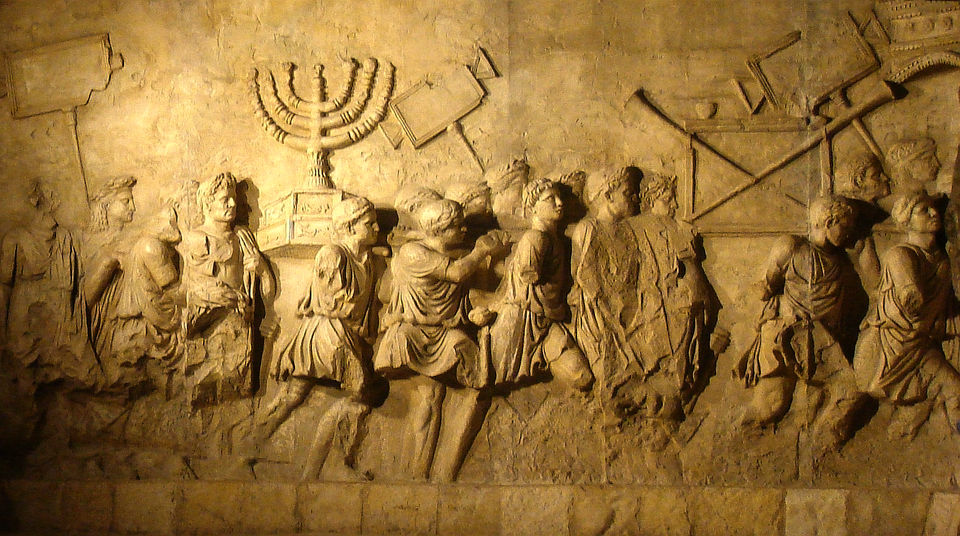
The Jewish War provides a vivid account of the triumph that followed Titus’ capture of Jerusalem, as the spoils of war are paraded through the streets of Rome:
It is impossible to give a satisfactory account of the innumerable spectacles, so magnificent in every way one could think of, whether as works of art or varieties of wealth or rarities of nature; almost all the treasures that have ever come one at a time into the hands of fortune’s favourites – the priceless marvels of many different peoples – were brought together on that day, showing forth the greatness of the Roman Empire.
Josephus starts to sound almost Trumpian in his register, in his endless superlatives, in his predilection for gold:
Masses of silver and gold and ivory in every shape known to the craftsman’s art could be seen, not as if carried in procession but like a flowing river… transparent stones, some set in golden crowns, some in other mounts, were carried past… Every item in the procession was escorted by a large group of men arrayed in garments of genuine purple dye interwoven with gold… Most of the spoils that were carried were heaped up indiscriminately, but more prominent than all the rest were those captured in the Temple at Jerusalem – a golden tablet weighing several hundredweight, and a lampstand similarly made of gold but differently constructed from those we [Josephus’ Roman readers] normally use. The central shaft was fixed to a base, and from it extended slender branches placed like the prongs of a trident, and with the end of each one forged into a lamp: these numbered seven, signifying the honour paid to that number by the Jews.
Captured enemies are counted amongst the amassed loot. Some of the revolt’s ringleaders are put on show during the procession, before being ceremoniously executed at the height of the festivities. Others are sold into domestic slavery or sent down the mines. Others still meet their end in gladiatorial combat, forced to re-enact the scenes of their defeat for the amusement of the Roman citizenry.
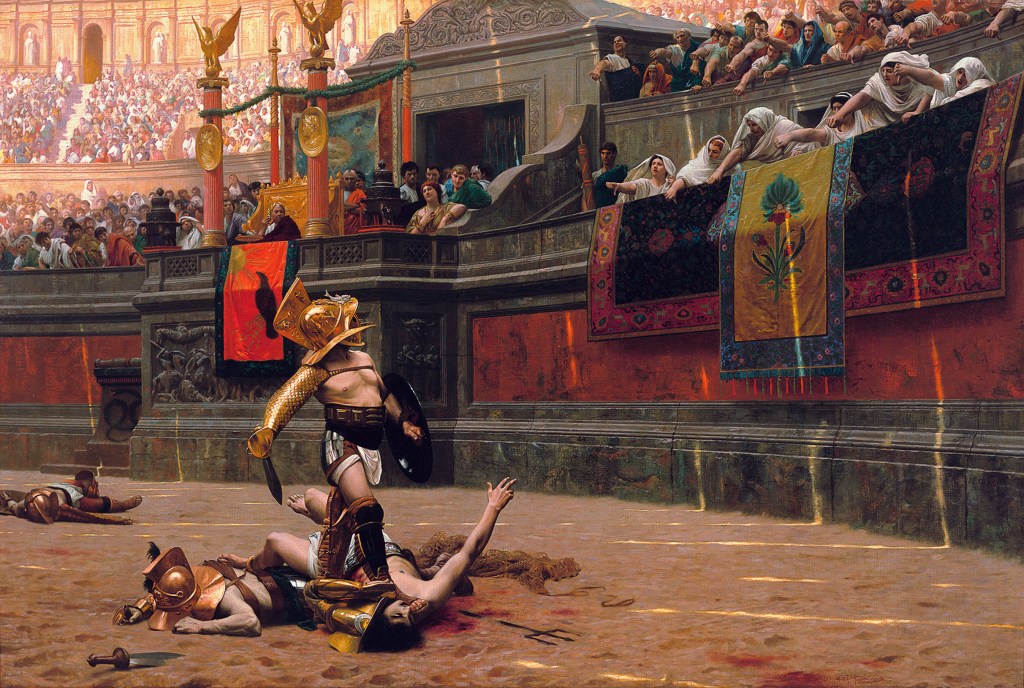

Violent entertainment: gladiatorial combat and cage-fighting on the White House lawn
The Arch of Titus was completed a few years later, commemorating the war and depicting the scenes of Roman triumph described by Josephus. It stands to this day in central Rome.
Of the divides between AD70 and the present day, there is one that I have so far only skirted around.
Numerous Jewish troublemakers were rounded up and ultimately executed by the Roman state during the first century AD, but it is Jesus of Nazareth who is best remembered.
The Jewish revolt is a pre-Christian war in all but chronology. Early Christian sects were yet to make any significant mark on the written record, with most scholars placing the composition of all four gospels after 70AD. If Josephus has anything to say about Jesus, it is largely lost to us – the brief lines that mention him in Antiquities of the Jews have clearly been tampered with by later Christian copyists.
To those living in the first century, the shared fate of Christianity and the Roman empire would have been unthinkable: not only that Rome would adopt as its state religion the obscure sect it had once suppressed, but that it would take as its central icon the figure of a man condemned to the most brutal punishment available to the Roman state. Crucifixion was only in rare exceptions inflicted on Roman citizens; it was an execution method generally reserved for the lowliest of criminals and enslaved people.
The teachings of Jesus were alien too. The renunciation of worldly wealth, the valorisation of the downtrodden and the weak – these were anathema to Roman sensibilities. The idea of an incarnate god wandering the earth was unremarkable to the Romans; but for this earthly figure to be a lowly criminal, rather than a deified emperor, represented a scandalous upending of the natural order.
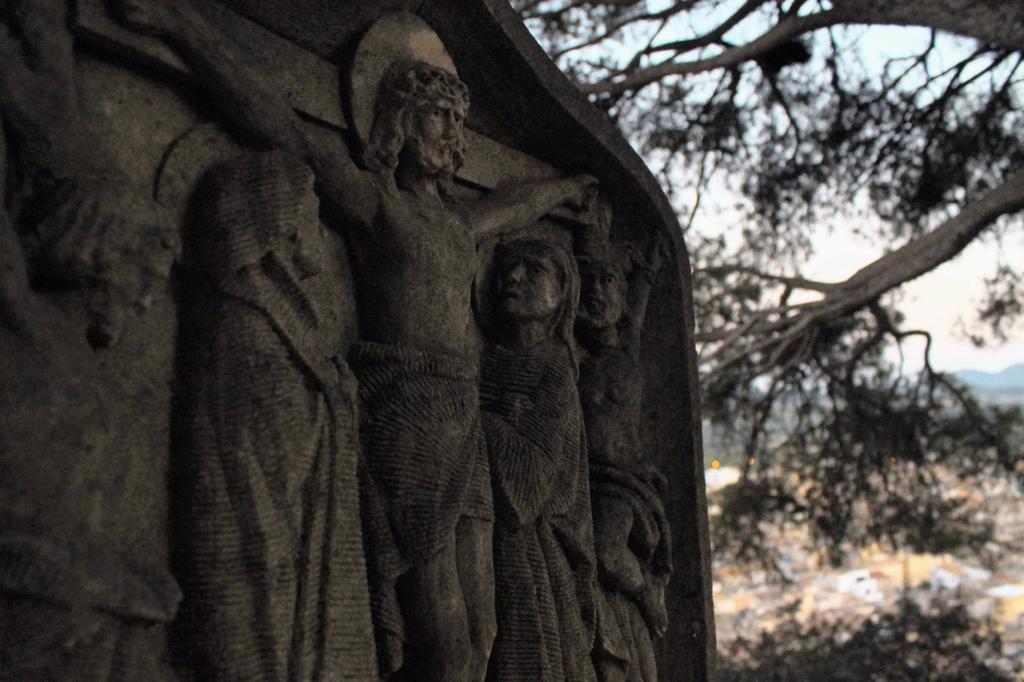
Come 2026, and the US secretary of war is invoking Christianity at every turn. In a now infamous Pentagon prayer service in March 2026, Pete Hegseth called in overtly religious terms for “overwhelming violence” against “those who deserve no mercy”, promising to deliver “wicked souls” to the “eternal damnation prepared for them”.
It would be tempting to frame Hegseth and his twisted vision of Christianity as an anachronism from the 11th century. His crusader tattoos and clash-of-civilisations rhetoric would certainly fit this characterisation of a religious fanatic waging holy war in the Middle East. Yet the reality of his rhetoric is more atavistic still, and better described as pre-Christian in its thinking.
Hegseth looks with nostalgia to an era when winners could act with impunity, with scant thought to the rights of the defeated. Free from UN oversight, free from The Hague, free from what he terms the “stupid rules of engagement”. Only this week he announced that the US would carry out its first military execution in 65 years, with plans to livestream the firing squad online.
The Jewish-Roman war had two competing sides with clear winners and losers, and tangible spoils of war. There is an almost reassuring simplicity to tales of this kind. In his fantasies of heroism and machismo, in his promises to show no mercy, Hegseth is rebelling against a contemporary conception of war that elides its bloody realities, that replaces talk of killing and victory with heavy-hearted engagements and diplomatic hand-wringing.
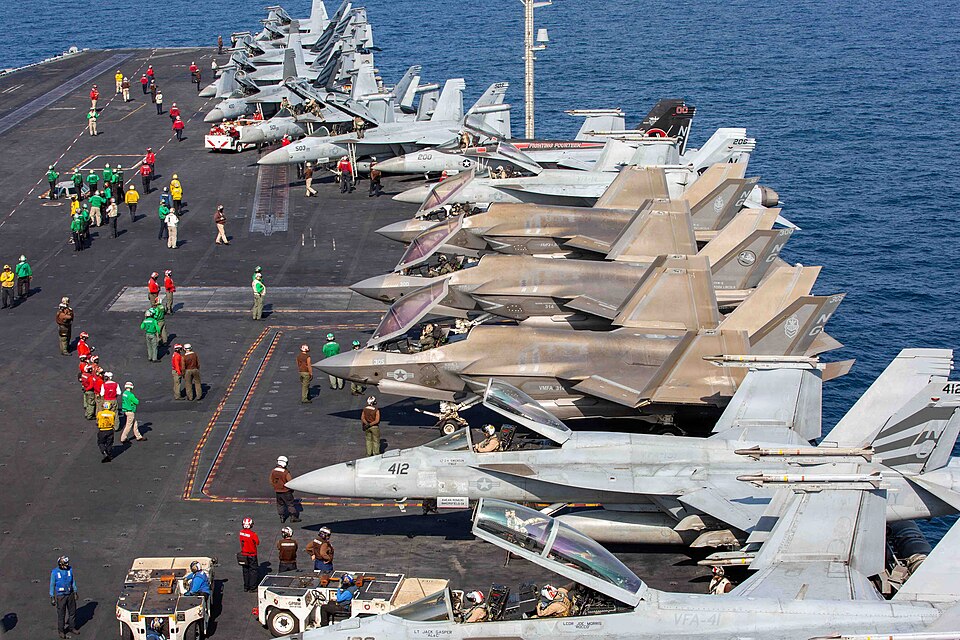
Photo: United States Department of Defense
Fittingly, he has described the Iranian leaders as “barbaric savages” – employing a pair of words heavy with historical baggage. ‘Barbaric’ has the most ancient roots of the two, derived from the Greek barbaros, itself thought to be an imitation of foreign speech as heard by Greek ears – ‘bar bar bar’. The equalising and universalising forces of Christian thought are absent, Hegseth’s phraseology here standing in stark contrast to St Paul’s claim that “there is neither Jew nor Gentile, neither slave nor free, nor is there male and female, for you are all one in Christ Jesus.” Instead he conceives of ‘civilised’ and ‘uncivilised’ peoples, to be carved up, divided and othered.
It is a deeply Christian idea to suppose that all human lives are of equal dignity and value – one so ingrained in the nominally post-Christian world that I begin to sound like an apologist by pointing it out. I am, for what it’s worth, not a believer in the theological claims of Christianity, or of any other organised religion. But I am under no illusion that my thinking can be decoupled from a Christian inheritance, woven into the most seemingly secular institutions and ideas.
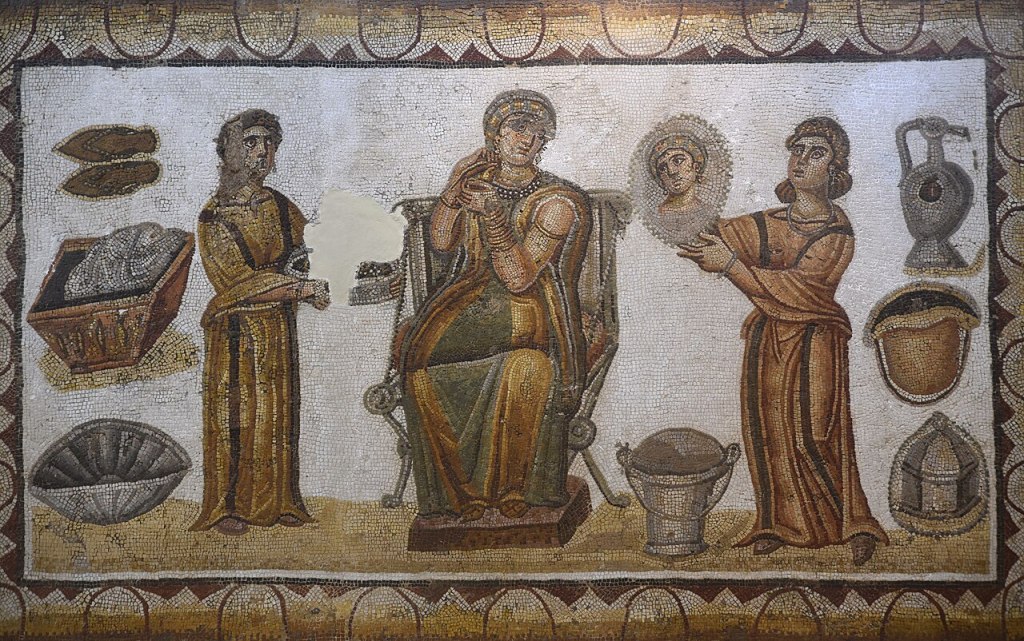
The value of human life was not taken for granted in Roman thought. Enemies of the state, barbarians and enslaved peoples were all expendable, readily treated as objects, their lives a means to an end. It was commonplace for unwanted or disabled infants to be exposed – abandoned outdoors to die. The language of power played out in Roman sexual norms too. There was nothing newsworthy about lovers of the same gender, but scandal arose when sexual acts or relationships contravened established hierarchies. Homosexuality and heterosexuality are terms that would have meant little to a Roman citizen; power dynamics mattered more – sex had to be enacted on the terms of the socially superior party, reflecting the dominion of men over women, of masters over their slaves. The broader cultural norm was clear: the exploitation of the weak by the strong was not only permissible, but a righteous act that reinforced the social and moral order. It is little wonder that fascist regimes have looked back to Rome so longingly.
I hardly need to spell out how Hegseth’s disdain for mercy is antithetical to the ethical vision set out in the gospels, or how far it stands from the peace-loving provincial who wandered ancient Palestine, asking his followers to love their enemies, and promising blessings for the peacemakers, the meek and the poor.
That said, there is much more to the figure of Jesus than entreaties to kindness. Throughout the gospels, and in subtly differing manifestations, Jesus warns his followers that the Day of Judgement is at hand, that the Kingdom of God is soon to arrive. In Mark, widely believed to be the earliest gospel, these apocalyptic warnings are most vivid. Matthew, using Mark as his source material, links these most explicitly with earlier scriptural predictions. In the realised eschatology of John, written later after the promised end-times had failed to materialise, the Kingdom of God is portrayed more as immanent than imminent, manifested in the fellowship of the church and in the workings of the Holy Spirit. Reading the gospels, modern readers encounter a preoccupation with the end-times that must prove startling to anyone who has so far encountered Jesus only as an abstracted set of altruistic aphorisms, falsely separated from his first-century Jewish context, in which the end of the world was always just around the corner.
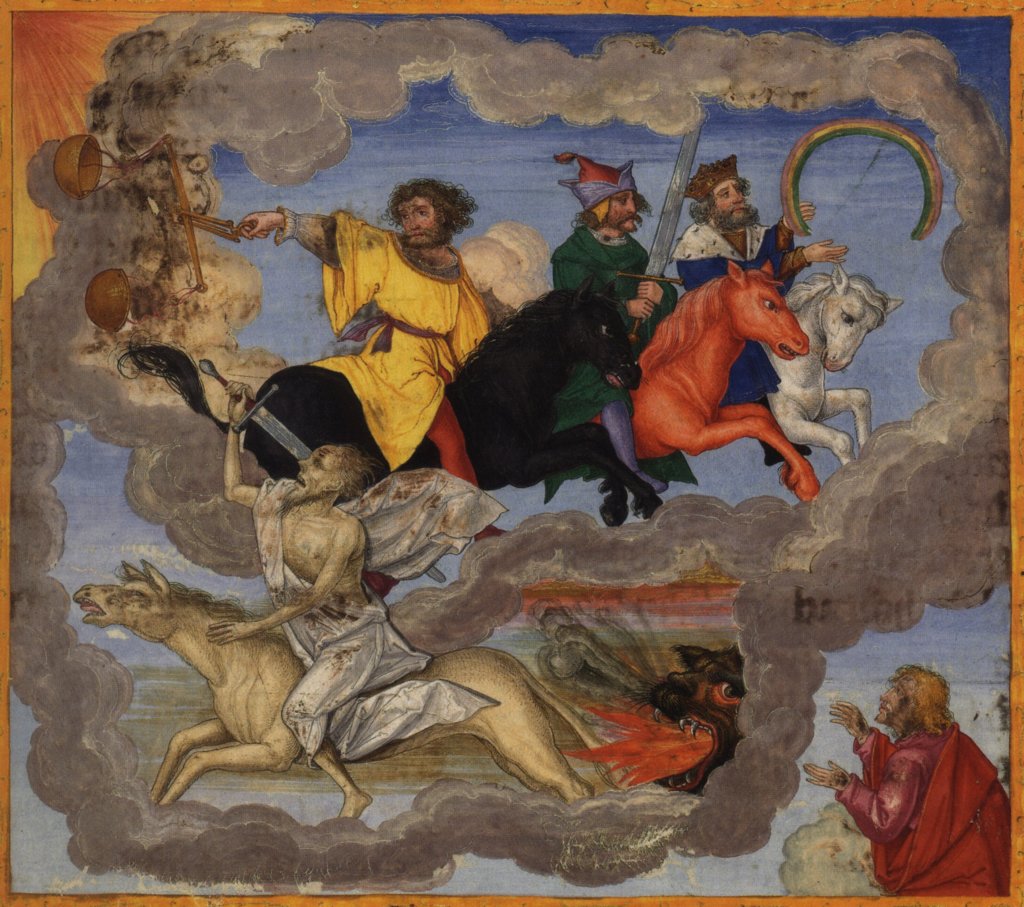
The Temple has a role to play in all of this. In the synoptics, Jesus seems to prophesise the fall of the Temple amongst other apocalyptic predictions. Or at least, he is shown to predict it, by evangelists writing after the events he is purporting to predict. The fall of the Temple therefore provides a popular test case for the mental acrobatics of Christian prophecy and eschatology: whether the terrible events foretold by Jesus should be read as references to the real history that was soon to unfold, or whether he points further ahead, to a future apocalypse yet to arrive. These debates may now seem arcane, but readings of gospel eschatology would go on to animate Christendom in centuries to come, influencing everything from medieval millenarian movements to the geopolitics of contemporary evangelical Americans. It is the sincere conviction of some evangelicals that US military intervention in the Middle East has the potential to hasten the end-times, by bringing about the conditions described in the Book of Revelation.
Throughout all of this there is a sense of history’s forward momentum, of events reaching towards an endpoint, whether this be a calamitous eschaton filled with false messiahs and satanic temptations, or an earthly realisation of the New Jerusalem. This teleological mode of thought – of history struggling towards an end goal – is something that pervades many modern secular movements, whether the Enlightenment faith in reason and progress, or the Marxist view of history with its inevitable march towards a communist utopia.
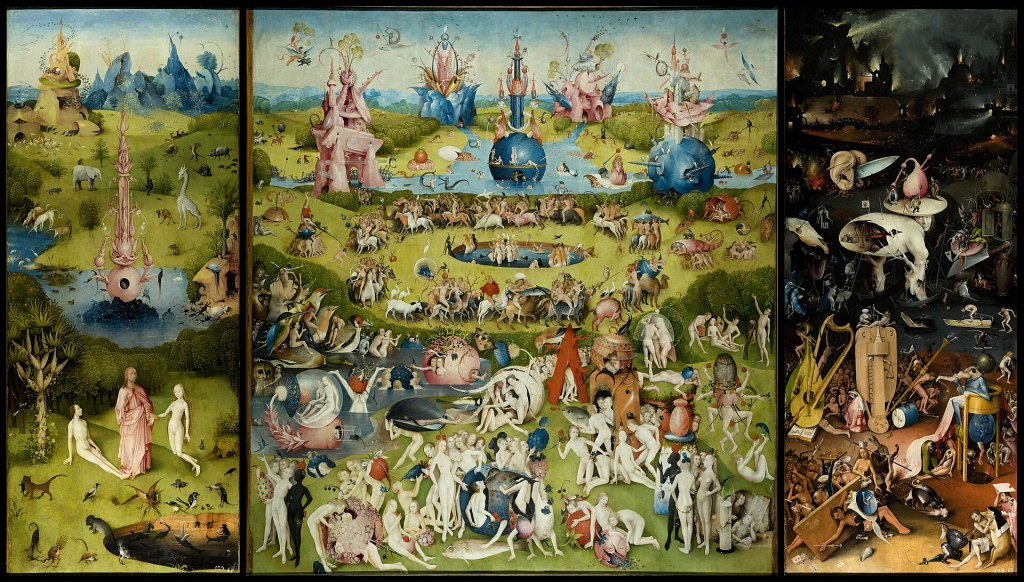
The teleological mode of thinking is so deeply entrenched that it can be hard for Christian or post-Christian observers to see history through any other lens. But to the Roman occupiers of Judea, the Jewish preoccupation with messiahs and end-times would have seemed alien. Unlike the Abrahamic view of history as a story with a beginning, middle and end, the Roman conception, largely inherited from the Greeks, was cyclical rather than linear. And if there was a direction of travel, it was generally down. Roman politicians of the imperial era were constantly looking back to the republic as an era of moral rectitude, throwing into relief the inadequacies of their own times. Some looked back further still, to Romulus, Remus and the very foundation myths of Rome. Good ancestry could take you far in Roman political life. Attempts to radically change Rome – to make it great again – were couched as a return to an earlier, nobler era. The Greeks, too, saw their own age as a degraded version of the age of heroes, and of the golden age before that. If the arrow of time pointed anywhere, it was down and back onto itself.
Trump likewise promises restoration rather than progress. He talks of a broken, lawless America, and pledges to return the nation to a lost golden age. By peddling narratives of loss, degeneration and degeneracy, he speaks to voters who find themselves materially disadvantaged, who feel that their values are unreflected in much of the media and the political establishment. In doing so he draws them into a classically coded view of history in which social change is viewed as decline.
By looking back with envy at the ancient world, the American right manages to make classicism both the object and the mode of its nostalgia. The contemporary West is, by their reckoning, a self-flagellating husk of its former greatness, under constant threat from enemies within and without.
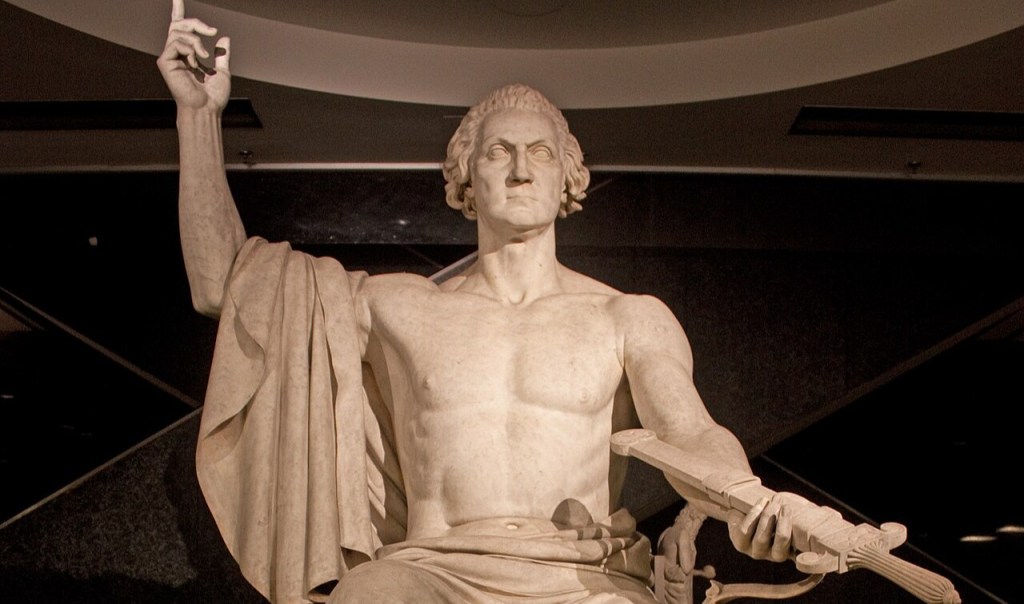
These narratives were evident when Trump’s former chief strategist Steve Bannon took over Trisulti Charterhouse, a former monastery set on a hillside in the Italian countryside. His plan was to create a think-tank and ‘gladiator academy’ for rising right-wing politicians. Images of the site show classical and biblical motifs in a Baroque-era restoration of a medieval monastery, only a two-hour drive from Rome itself – a late Renaissance dream of antiquity, co-opted and reborn for the American age.

The scheme never came to fruition. Little evidence remains of it online beyond a Channel 4 news clip in which one of Bannon’s British associates rattles around the otherwise empty monastery, claiming it as “the global headquarters of the fight to defend the Judeo-Christian West”. He soon makes it explicit which Abrahamic faith the term ‘Judeo-Christian’ was used to exclude.
The ancient world has a certain currency in the British imagination too, being closely associated with prestige, privilege and the public school system. My patchy understanding of antiquity is that of an autodidact. I had a slight fear on starting medical school that my lack of Greek or Latin would prove a stumbling block. Furthermore, this was Cambridge, an absurd institution in which Latin graces are read out before formal dinners, and graduation ceremonies are still conducted in Latin, with each college’s ‘Praelector’ leading the ‘graduands’ to the Senate House. This was all meant to be off-putting to state school kids like me, but being the pretentious nerd I was, it was all part of the allure. In any case, I needn’t have worried. My peers who came equipped with Latin and Greek were able to guess at the meaning of certain terms when we first encountered them, but this conferred no real advantage. As I have become proficient in medical jargon, I have picked up snippets of Latin and Greek – a recognisable corpus of niche ancient terms that have survived in the medical profession. I am unable to read a line of Virgil, or to conjugate a single verb, but I could tell you that a fossa is a ditch, a flocculus is a tuft of wool, and a fascis a bundle of rods. These relics and titbits are surely among the more benign forms of classical influence in the modern world.
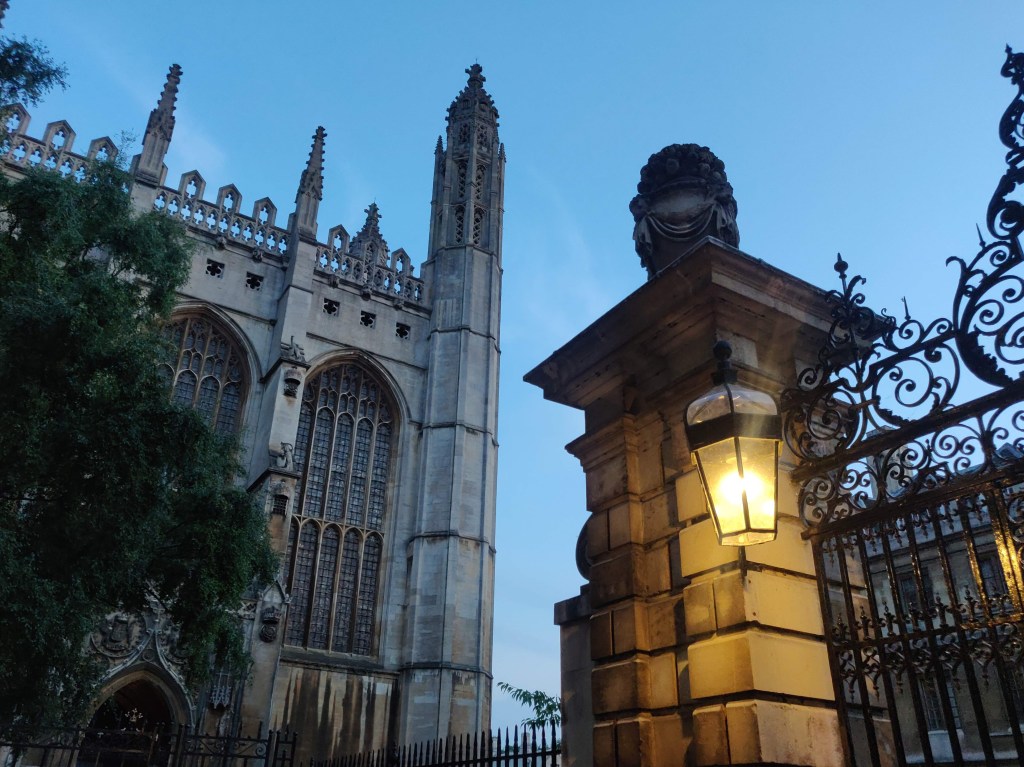
Pete Hegseth has had his two cents on what it means to receive a classical education. In 2022 he co-authored Battle for the American Mind: Uprooting a Century of Miseducation. He bemoans the influence of progressive politics in education, whilst making the case for a “classical Christian education”, based on the guiding principles of “Athens, Rome and Jerusalem”. The proposed curriculum consists of Greek logic, grammar and rhetoric, Roman law and order, and Judeo-Christian ethics.
Only in a simplified and romanticised view of antiquity could these forces be lumped together with such an apparent lack of tension. This is a false and sanitised view of Graeco-Roman culture as rational and restrained, filled purely with august orators and musing philosophers. The real ancient Mediterranean, as heard in the scattered sources that survive, resounds with a polyphony of voices: some stern and stoic, but plenty of others that are garrulous, ribald and libidinous in their chatter. The irrational abounds – in Bacchanalian frenzies, in dreams and divination, in the endlessly capricious activities of the gods. When cherry-picked for political purposes, a vision of antiquity cast in cold white marble is not only unrepresentative, but impoverished too.
Faced with the uncertain outcome of the Iran war, the ancient Romans might have turned to the birds themselves. Sages, seers and soothsayers were capable of reading signs in the flight and chatter of the birds. This was the art of ornithomancy to the Greeks, or augury to the Romans – though the practice dates back to even earlier civilisations. Sacred chickens could peck out predictions in the pattern of scattered grain, whilst a passing eagle might be read as an ominous portent. A bad sign from the skies might be reason enough to turn a whole legion back on its course.
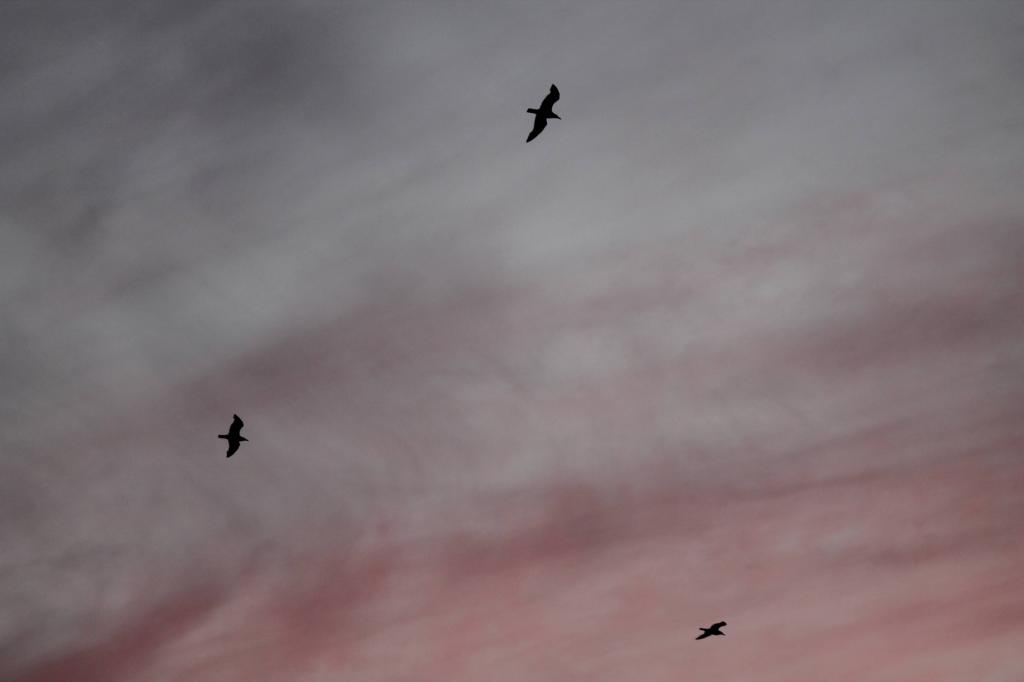
These cultural practices existed within a cosmos where the boundaries between humans, animals and the divine were porous and frequently crossed. Gods took the form of animals, intermingling and interbreeding with mortals. An intemperate god could be appeased with a sacrifice, the animal’s entrails then read to divine the future.
The Christian story, by contrast, snakes back to Eden, where humans, made uniquely in the image of God, are granted dominion over the world’s flora and fauna. Genesis makes clear the fact of human distinctiveness, whilst also setting out a premise that would later be incorporated into a linear Christian metanarrative, with Adam’s fall tied to Christ’s atonement, and in due course to the Day of Judgement.
When Victorian naturalists came to conceptualise the emerging evidence of evolution, they did so burdened with Christian cultural baggage, whatever their individual metaphysical beliefs happened to be. There still existed an impulse to afford special status to human beings, to view evolutionary history as a march towards the human telos.
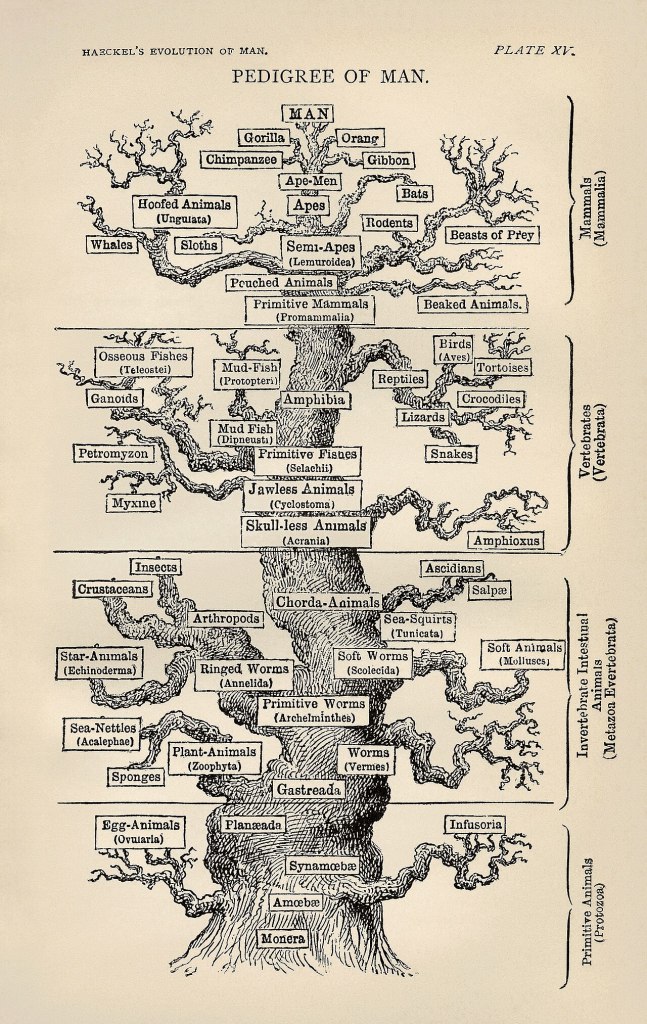
That humanity could be an accident of progressively complexifying inert matter, and not the central star of a divinely ordered drama, would prove a humbling displacement, and the central crisis of modernity. Or at least, this was the case in those civilisations shaped and by the Abrahamic faiths. For the religions that originated within the Indian subcontinent, there was less far to fall. Jainism, for instance, has a vastly different cosmology to that laid out in Christianity: no creator or creation, but an eternal and cyclic existence; no human souls and animal automata, but gradations of sentience amongst all living beings. In this sense, the soul-searching that evolutionary theory loosed upon the world was contingent on the Christian milieu in which it was first postulated.
In the years since evolutionary theory was first proposed, the story has been one of further disenchantment, the buttressing of human distinctiveness slowly falling away. The idea of a unique human essence – whether the soul as described in religious terms, or capital ‘R’ Reason as its Enlightenment stand-in – is not one that holds up well in a world after Darwin, Freud and B.F. Skinner. The seeds of this disenchantment were sown earlier still, by a Newtonian clockwork universe, in which the human microcosm could only last so long. It was in this changing worldview that the early modern body, once animated by humours and unseen vital spirits, came to be reconstituted as a material machine, not just connected to the material world, but part of it. We now live as biochemical, hormonal and neurological selves; deeply contingent beings shaped by our genes, cultural inheritance and early social conditioning, with seemingly independent actions shaped through unconscious processes and unseen biological factors.

All that said, there is clearly something distinct about the human species.
Belief is one area of discontinuity. Bonobos, chimpanzees, gorillas and orangutans can, to varying degrees, attribute perceptions, knowledge states and intentions to others. But belief is a subtly different beast. I focused my university dissertation here, on the evidence for an understanding of false belief, asking whether other primates could recognise when another mind held beliefs at odds with reality. I reviewed experiments involving chimpanzees, stolen bananas and sliding doors, attempting to determine whether they could make this cognitive leap.
To most academics, this ability appears uniquely human. Beneath the idea of false belief lies a conception of other minds as existing in a representational relationship with the world. Like all representations, beliefs are susceptible to distortion, simplification and error. From an understanding of representation flows language – a relational system of shared symbols, capable of referring to features in the world. And from language flows culture, through which new learning can be retained and transmitted, with far greater capacity and fidelity than could otherwise be achieved through simple behavioural or material traditions.
In short, the human spark, if we are to describe one, lies in the capacity to hold other minds as minds, as subjectivities that represent the world in alien and fallible ways.
It might seem trite to finish by calling for more empathy in the world, though empathy is perhaps not quite the right word. It might be better to split the term into cognitive empathy (perspective-taking) and affective empathy (feeling what others feel). Within cognitive empathy, it is the ontological reconstruction described by Anderson that I wish to reach for.
My contention is that the most important aspects of empathy lie not in identification with the other, but in recognising the fundamental strangeness of other minds. It happens when we encounter figures from history with dramas and dilemmas recognisable to us, but whose approaches to them now seem strange and unsettling. It happens when we rub against subjectivities that we can barely analogise, like attempting to envisage the qualitative experience of a bird navigating the world by its magnetic sense.
If humanity’s worst actions are to be understood and resisted, this can only be done by seeking to inhabit the worldviews of people whose actions we find objectionable. Bad faith, anger, fear and selfishness – these forces can and do motivate human behaviour, we should reach for them as late as possible when ascribing motives. I don’t think that with greater perspective-taking the world would instantaneously break out in peace and love, but I do feel that an ontological approach is the best tool we have for understanding the ecosystem of interests in which bad actors operate. I also doubt that my online ramblings will be changing US foreign policy any time soon. What I have sought to do here is to sketch out my particular experience in these strange times, and to point towards a tool often missing from progressive praxis.
As much as I have spoken here of world affairs and grand historical narratives, this is a standard I apply more prosaically, in parenting, in my work as a GP. Of course, I fall short daily, for reasons of pragmatism, or simple personal inadequacy. Nonetheless, the central tenet holds: to start from the premise that others hold beliefs about the world that may be inaccurate, or more often, simply different from one’s own. Behaviours can then be interpreted in an ontology-first manner, reconstructing what others take to be true and real about the world, before making sense of their actions within this framework.
As autumn rolls around, an end to the Iran war seems perennially out of reach. The birds that crossed paths with intercontinental missiles in the spring are starting their journeys back south. These emblems of radical otherness will, barring climate collapse, continue their migratory journeys for millennia to come, soaring over the undulating course of human affairs, and nesting on the banks of the Euphrates, long after American hegemony and the Iranian regime have become as faded as Roman ruins.